

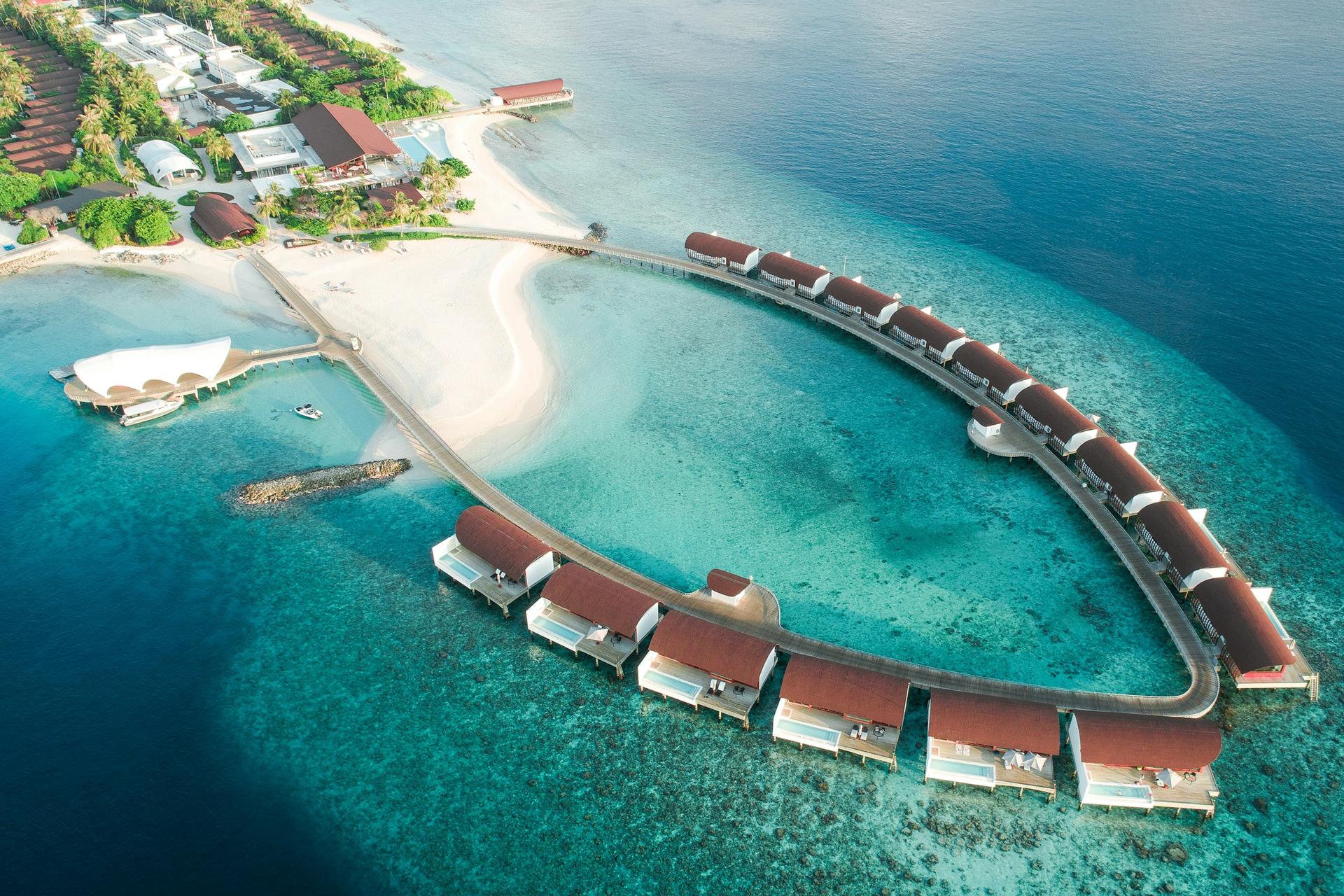
Few places look quite like their photographs, but the Maldives genuinely does. Scattered across the Indian Ocean south-west of Sri Lanka, this nation of coral atolls is home to around 1,200 islands, many of them occupied by a single resort. That makes timing a little different from a typical beach holiday: you are not choosing a resort town, you are choosing an island – and a season that suits how you want to spend your days.
The good news is that the Maldives is warm all year round. Daytime temperatures sit around the high 20s to low 30s Celsius in every month, and the sea stays bath-warm. What changes is the weather pattern, driven by two monsoons. Here is how the year breaks down, and how to pick the right moment for you.
The dry season: December to March
The north-east monsoon brings the Maldives' classic dry season, generally running from December to March. This is when you can expect the most sunshine, the calmest seas, the lowest humidity and the clearest water – the postcard Maldives. It is also peak season, which overlaps neatly with the British winter, Christmas, New Year and February half-term.
Because this is when demand is highest, the best overwater villas and the most popular resorts are snapped up early, particularly over the festive period. If you have your heart set on a specific resort or villa type for Christmas or Easter, it pays to book many months ahead.
Best for: the most reliable sunshine, first-time visitors, winter escapes and celebrations over the festive season.
The shoulder months: April and November
April is often hot, still and gloriously calm, sitting right at the end of the dry season. November marks the transition back from the wet season, and conditions improve week by week as the month goes on. Both months can offer a sweet spot: much of the dry-season weather, often with a little more choice and better value than the busiest weeks.
Best for: couples who want a great balance of weather and availability, and anyone travelling outside school holidays.
The wet season: May to October
From around May to October, the south-west monsoon brings more cloud, higher humidity, stronger winds and more rainfall. That sounds off-putting, but it rarely means days of grey drizzle. Typically you will see short, heavy tropical showers followed by sunshine, and many days are perfectly lovely. June tends to be among the wetter months, but there is a great deal of variation from year to year.
The trade-off is value. This is generally the quieter, lower-priced time to travel, and resorts that would be out of reach at Christmas can become far more attainable. It is also when many honeymooners travelling after summer weddings arrive – and many feel the experience is just as magical.
Best for: value, summer weddings and honeymoons, and travellers who don't mind the odd tropical downpour.
Seasons for wildlife and diving
The Maldives is one of the world's great destinations for snorkelling and diving, and the monsoons shape the marine life too. Currents shift with the seasons, and plankton follows the currents – which is why manta rays and whale sharks tend to gather on different sides of the atolls at different times of year.
- Manta rays can be seen year-round, but the famous gatherings at Hanifaru Bay in Baa Atoll (a UNESCO Biosphere Reserve) are associated with the south-west monsoon, roughly May to November.
- Whale sharks are found in South Ari Atoll throughout the year.
- Visibility is often at its best during the dry season, when the water is calmest.
- Surfers head to the Maldives during the wet season, when swells are more consistent.
If seeing a particular creature is high on your list, tell us – the choice of atoll matters as much as the month, and some resorts have resident marine biologists and excellent house reefs.
Thinking about school holidays
For families, the calendar is often set for you. The Maldives works beautifully for children, and many resorts have kids' clubs, shallow lagoons and family villas. February half-term falls in the dry season, and Easter usually lands in the calm, hot shoulder month of April and are popular. The summer holidays land in the wet season – still warm, still beautiful, and often better value, but with a greater chance of showers. October half-term sits on the cusp of the drier months.
Choosing your island
Your choice of resort will shape your holiday more than anything else. A few things worth weighing up:
- Transfer type. Resorts near Malé are reached by speedboat, often in under an hour. Further atolls are reached by seaplane – a breathtaking flight, but one that only operates in daylight – or by a domestic flight followed by a boat.
- Board basis. Because you can't simply stroll to a local restaurant, many guests find half board, full board or all-inclusive makes sense. We'll help you compare.
- Villa style. Overwater villas are iconic; beach villas give you sand on your doorstep and are often better for little ones.
- House reef. If you love snorkelling, a resort with a good house reef means you can simply wade in from the beach.
Getting there from the UK
There are direct flights from London to Malé taking around ten hours, and plenty of excellent one-stop options via the Middle East. Many travellers like to break the journey with a few nights in Dubai or Doha, or combine the Maldives with Sri Lanka for a two-centre trip of culture followed by pure relaxation. The Maldives is four hours ahead of the UK in summer and five hours ahead in winter, so jet lag is mild.
A few practical tips
- Pack reef-safe sun cream and a long-sleeved rash vest – the equatorial sun is strong.
- The Maldives is a Muslim country; resort islands are relaxed, but modest dress is expected if you visit a local island or Malé.
- Check passport validity and current entry requirements on the UK government's foreign travel advice pages before you go.
- Comprehensive travel insurance is essential, as for any long-haul trip.
So, when should you go?
If sunshine is your priority and you can travel in winter, December to March is hard to beat. If you'd like a little more value or are travelling in the summer, the wet season can still deliver an unforgettable trip. And the shoulder months of April and November are a lovely compromise. Whatever you choose, the right island makes all the difference – and that's exactly where we come in.